
Healthy food boxes are coming back to North Carolina
North Carolina plans to restart weekly home delivery of small healthy food boxes through the Healthy Opportunities Pilot (HOP) in early 2027. Let’s get ready for a strong launch that shows what Food Is Medicine can do.
The NC Food Is Medicine Coalition thanks the lawmakers, DHHS staff, community organizations, and advocates who helped bring HOP back.
What we heard in the webinar
The restart focuses on Medicaid members who live in a pilot county, have low or very low food security, and cannot shop for themselves or get to a food distribution site. Members must also meet at least one of these criteria:
- Be pregnant.
- Have diabetes.
- Have cardiovascular disease.
The webinar identified members in Standard Plans and Tailored Plans, as well as members in prepaid inpatient health plans who qualify for Tailored Care Management.
Members and families can self-refer, and providers and community organizations can help start a referral. Health plans can also use claims to identify members who may qualify. Care managers assess eligibility, health plans authorize services, and community organizations deliver the boxes.
Food boxes accounted for 74% of services in the original pilot, and about 30,000 members received one. In the full pilot evaluation, participants had fewer emergency visits and hospital stays and more outpatient visits than expected. The evaluation estimated $164 less in Medicaid spending per member per month, including pilot service and administrative costs. This restart gives North Carolina a chance to learn what reliable access to medically appropriate foods through weekly deliveries can accomplish for people managing chronic conditions or navigating pregnancy.
How much service could the funding support?
The $9 million state investment is expected to draw federal matching funds, bringing the total to about $25 million. In the original pilot, direct services accounted for 77.9% of reported service and administrative spending, excluding capacity building. If that same share goes to direct services this time, about $19.5 million would be available for food box deliveries.
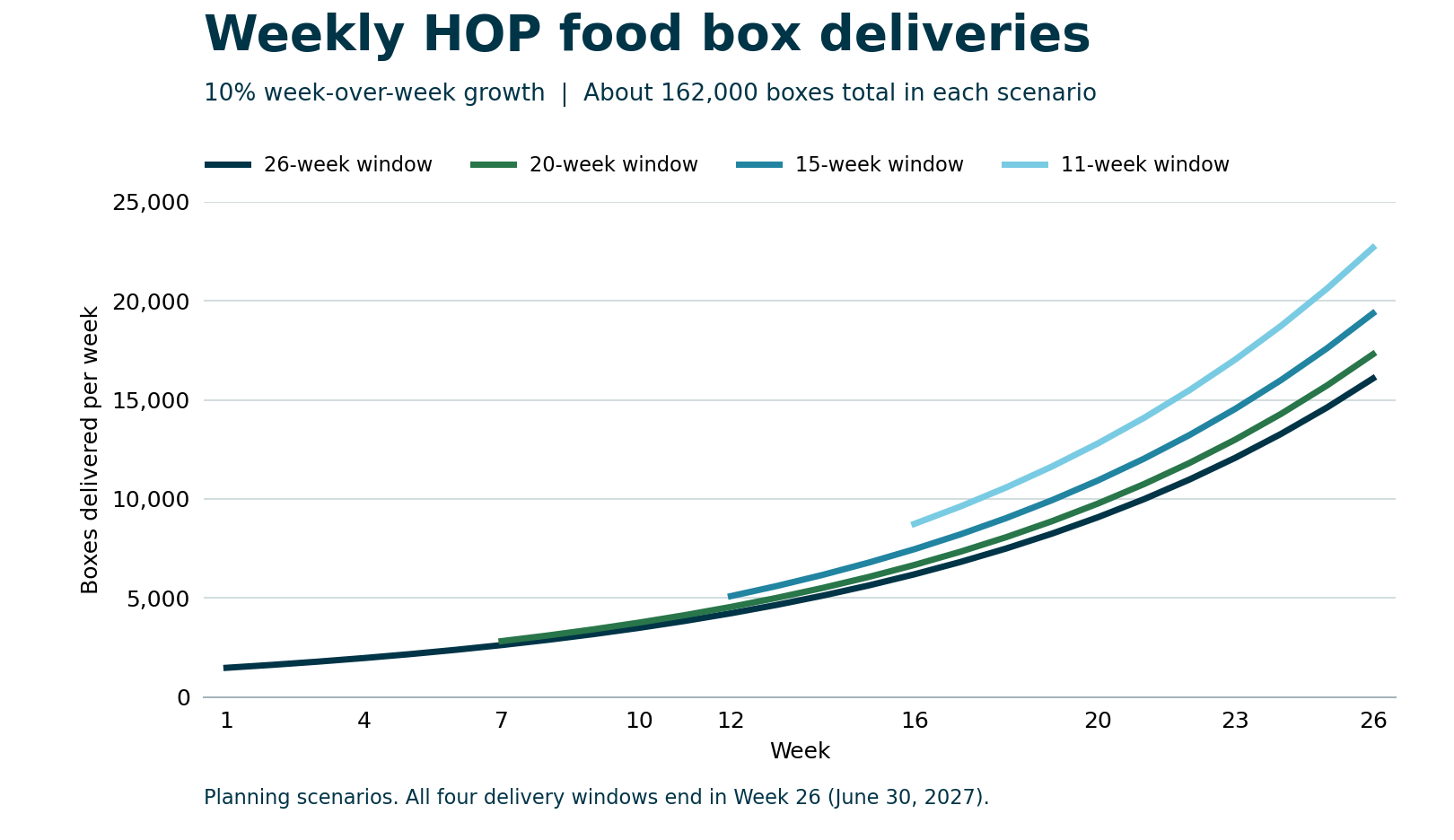
At $119.88 per delivery, that would pay for about 162,000 boxes across the three pilot regions. Over a 12-week delivery window, that would average about 13,500 deliveries per week. How many weeks an individual member receives will depend on when they enroll and how long services are authorized.
Across the four windows we modeled, from 26 weeks to 11 weeks, providers would need to deliver roughly 1,500 to 9,000 boxes in the first week to reach about 162,000 total deliveries by June 30, assuming weekly deliveries grow by 10% each week after launch. A shorter window requires more deliveries at launch and more deliveries per week by the end.
Can local food fit within the rate?
Yes. Caja Solidaria’s sample box includes local produce, a pound of meat, dry beans, whole grains, and a specialty item. Using rounded prices from our July price list, here’s how we could build a box that supports health by bringing whole foods to members.
| What goes in the box | Estimated cost |
|---|---|
| Five vegetables and four fruits | $25.00 |
| Two whole grain items | $9.00 |
| Three protein items | $15.00 |
| Rotating specialty item, such as oil or honey | $10.00 |
| Total food | $59.00 |
| Staff time for procurement, navigation, delivery, communications, and billing | $45.00 |
| Available for vehicles, cold storage, rent, and utilities | $15.88 |
This is an illustrative budget. Providers should use the final relaunch guidance when choosing box contents.
What we need to do next
- Help members get connected. Make sure hospitals, clinics, care managers, and community organizations know who may qualify and how to help members and families request a referral.
- Get ready to buy and deliver. Work with North Carolina growers on seasonal availability, identify substitutions before ordering, and budget for food and staff costs while waiting for reimbursement.
- Document what changes. Track whether members can get enough nutritious food, how consistently deliveries reach them, what it costs to deliver, and how much of the food budget reaches North Carolina farms. Work with health care partners to understand changes in health and use of care. Together, those results can show lawmakers what continued investment beyond June could mean for members and rural communities.
Sources
- November 13 NC Medicaid webinar
- NCDHHS relaunch announcement
- HOP summative evaluation. Table 23 reports service costs, Table 85 reports administrative payments, and Table 90 reports capacity building.
- Prior food box guidance
- Caja Solidaria’s supplier prices and staffing estimates